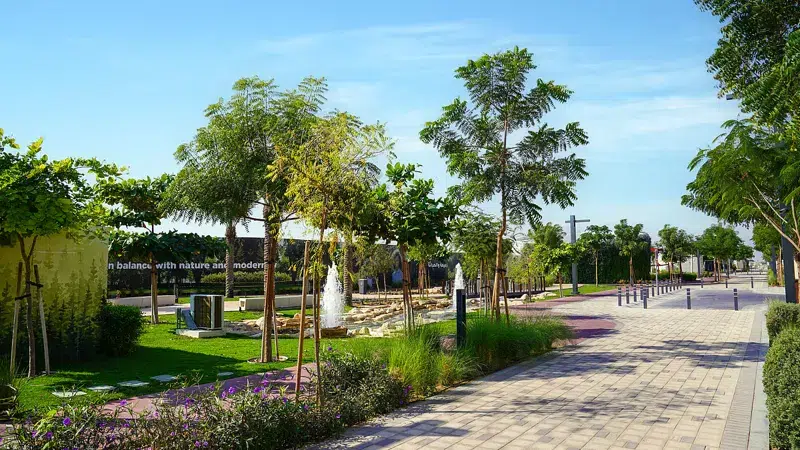
Sustainable real estate is booming in the United Arab Emirates (UAE) with whole cities being built from north to south as demand for conscious living is on the rise.
With the goal of reducing its environmental impact and maximise energy efficiency, deploying advanced technologies and eco-friendly materials are among the ways developers are trying to meet a growing demand.
Initiatives like the 2050 Dubai Clean Energy Strategy and the UAE Net Zero by 2050 Strategic Initiative have helped drive the push towards sustainable design. And with added benefits and subsidies for developers such as tax breaks or rebates for energy-efficient upgrades and reduced fees and faster permissions for green-certified projects, it means the market is flourishing.
The benefits are making it attractive to investors, including enhanced marketability, according to UAE developer Sobha, which says there is a higher return on investment.
“Sustainable properties often command premium rental yields and higher resale values due to their growing demand. Modern tenants and buyers are willing to pay more for eco-friendly, energy-efficient homes that promise lower utility costs and improved living conditions. In a city like Dubai, where expatriate populations seek quality housing, sustainable properties stand out as a lucrative investment option,” the developer says.
Sustainable developments require developers to educate buyers about how it will impact them in the long run. Very few buyers inquire upfront that they want a sustainable building.That’s where education matters. “Some significant impacts for buyers in the long run are lower water and energy consumption and lower maintenance fees. Since the building is sustainable, it has a longer life cycle, leading to a higher rental yield and resale value,” he told KT Luxe.
Education is exactly one of these challenges for developers, according to Yousif Ahmed Al Mutawa, Chief Real Estate Officer at Shurooq, which is now developing Sharjah Sustainable City. “Like any large-scale development, building a sustainable community comes with its own set of challenges, especially when it’s developed on such a significant scale. For example, our city will span 7.2 million square feet,” he said.
“Some of the key hurdles can involve effectively communicating the long-term benefits of sustainable living. That’s why we at Sharjah Sustainable City place a strong focus on community engagement and education through regular programmes and workshops covering a wide range of topics, including waste management, sustainable art, water conservation, climate action, and health awareness initiatives like Pink October.”
They have also invested in engaging younger residents, creating tailored programmes that inspire them to adopt and champion sustainable practices from an early age. “This continuous engagement helps build a stronger, more informed, and active community,” he said.
However, there are many benefits for buyers, who also have the added advantage of energy and cost savings. According to a Sobha spokesperson, sustainably built properties reduce energy consumption through a combination of advanced systems and eco-friendly materials, significantly lowering electricity and water bills.
The government of Sharjah has offered major incentives to new buyers including no service maintenance fees for the first five years after purchase, which makes green living more affordable. On top of that, all the villas are smart homes equipped with solar power and energy-efficient appliances that help residents save on their utility bills while living more sustainably.
The UAE pioneer was Abu Dhabi’s Masdar City and it has been followed by many other sustainable communities and others are in the pipeline, including Dubai Sustainable City, and the upcoming Sharjah Sustainable City.
Andrew Cummings, head of residential at Savills Middle East said the growth is steady. “Demand for sustainable property in the UAE has grown steadily in recent years as buyers become more conscious of efficiency, comfort, and long-term value,” he said.
“While traditional developments remain extremely popular, we’re seeing greater curiosity around communities designed with sustainability in mind. Projects such as Khalid Bin Sultan City by BEEAH and Ghaf Woods are excellent examples. They’re raising awareness of how smart design, energy efficiency, and greener living can enhance the overall residential experience.”
For investors, there are many advantages, he added. “The benefits are both environmental and practical. Sustainable homes are often designed to optimise energy use and temperature control, which can reduce costs and improve daily comfort. From an investment perspective, they also hold strong appeal as demand for environmentally responsible developments continues to rise. Communities like Khalid Bin Sultan City showcase how sustainability can complement quality design and modern living rather than compete with it.”
Khalid Bin Sultan City includes smart infrastructure and renewable energy in an all-inclusive community, while Ghaf Woods integrates natural landscaping and air-quality enhancements adding new layers to what buyers already value in established developments.
“Most buyers of sustainable developments tend to be end-users who plan to live in these homes and value the health and lifestyle benefits they offer,” Cummings said. “We’re also seeing strong interest from younger families and international investors who recognise sustainability as part of the UAE’s long-term vision. That said, the appeal is broad, as many buyers are open to both traditional and sustainable communities, choosing based on location, design, and overall quality.”
These developments include energy-efficient solutions such as solar panels, energy-efficient appliances, and LED lighting with water conservation systems such as low-flow fixtures, greywater recycling, and smart irrigation. Developers are also using sustainable construction materials such as recycled, renewable, or locally sourced materials.
But beyond the UAE, Sean Heckford, Director of Built Asset Consulting at Cavendish Maxwell said the Middle East is undergoing a significant shift in residential development, driven by urgent sustainability goals amid rapid urbanisation and environmental challenges such as extreme heat, water scarcity, and high carbon footprints. Qatar’s per capita CO2 emissions reached 37 metric tons in 2020, among the highest globally, underscoring the critical need for energy-efficient housing solutions.
“Leading countries like the UAE, Qatar, and Saudi Arabia are pioneering sustainable design through adoption of green building standards such as LEED, Saudi Building Code (SBC 1001) & Mostadam Certification, GSAS (Qatar), Al Sa’fat (Dubai) and Pearl Rating System (Abu Dhabi). These frameworks promote energy efficiency, water conservation, and use of low-carbon materials, helping reduce operational costs and environmental impact,” Heckford said.
Developers are responding with innovative projects showing the transformation such as Msheireb Downtown Doha, a $5.5 billion sustainable urban regeneration, which it says reduces energy consumption by 32 per cent through heritage preservation, natural ventilation, and green technologies. In Saudi, Riyadh’s 1364AH lifestyle centre integrates the culturally rooted Salmani architecture principles, open-air designs that minimise cooling needs and concepts that foster community engagement.
“Developers increasingly specify low-carbon materials like sustainable steel, engineered wood, and low-carbon concrete, achieving embodied carbon savings of up to 700 kgCO2e/m2. Early-stage integration of Life Cycle Assessments (LCAs) and passive design principles ensures that sustainability is embedded from concept through construction,” Heckford added.
The region’s unique climate and urban challenges have accelerated adoption of passive design strategies, such as maximising natural light and ventilation, advanced insulation, and shading techniques, which are critical to reducing energy demand in arid environments.
Sustainability is also influencing social and economic dimensions of residential development. With soaring housing demand and cost-of-living pressures, there is a growing focus on affordable, well-planned urban housing that balances environmental responsibility with inclusivity, supported by partnerships between developers, governments, and non-profits.
“This evolving landscape signals a profound redefinition of residential architecture in the Middle East — one that honours cultural heritage, embraces cutting-edge sustainability technologies, and addresses the pressing environmental and social needs of the region’s rapidly growing urban populations,” added Heckford.
For More Details: Please Visit FajarRealty
Source: Khaleej Times
06th December, 2025
