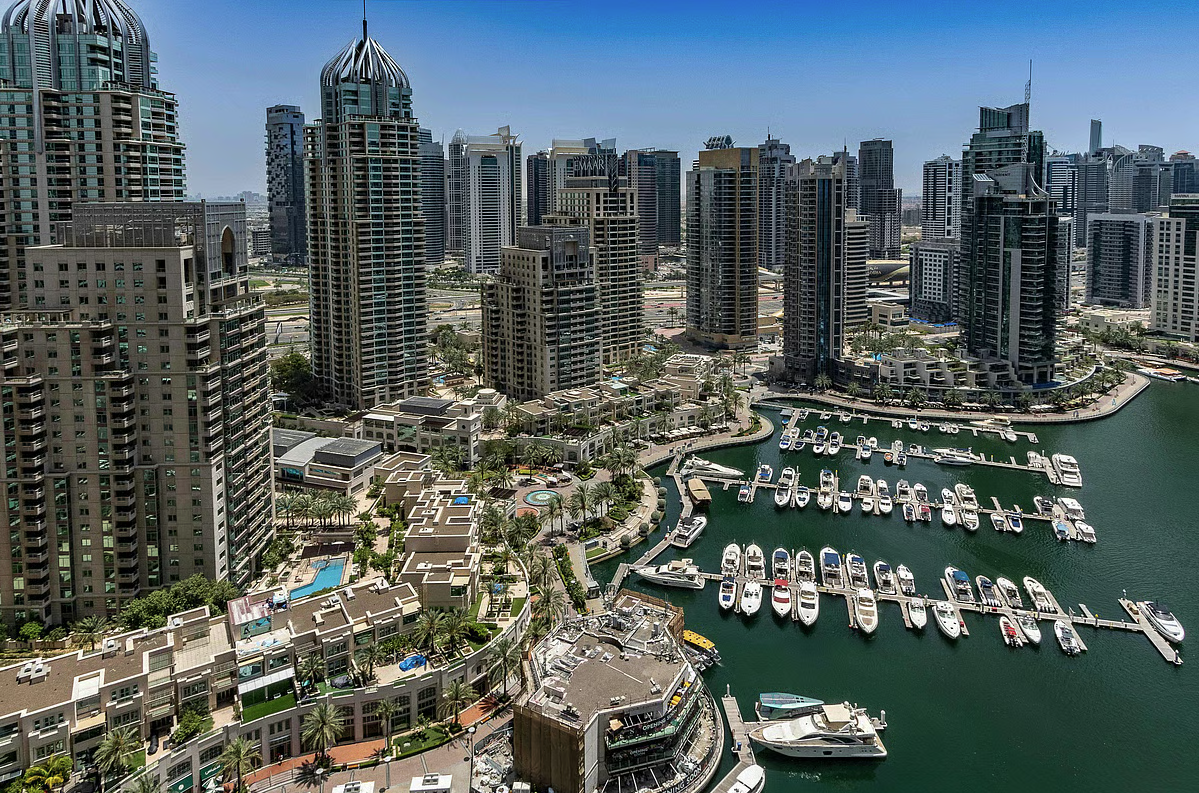
Tight supply conditions, influenced by changing demand patterns and operational needs, are driving up prices and rents while shaping development strategies across the UAE’s residential, hospitality, and industrial sectors, a report showed on Monday. The UAE’s real estate market experienced strategic evolution across these three sectors, with robust demand and shifting occupier and investor priorities actively reshaping market dynamics in Q3 2025, according to JLL’s latest Q3 market report. Greater diversification, strategic adaptability, and value optimization are further enhancing their potential for long-term, sustainable success.
Amid record transactions, off-plan sales emerged as the clear driver of growth in the UAE’s residential sector in Q3 2025, underpinned by healthy fundamentals and strong demand. While the hospitality sector marked a strategic shift in investment patterns toward existing assets, the industrial warehouse sector’s evolution saw intensified demand for both specialized and flexible warehousing solutions.
Taimur Khan, Head of Research, Middle East, and Africa, JLL, said: “Strong macroeconomic fundamentals and strategic diversification efforts in the UAE have solidified the real estate market’s growing maturity. This exceptional resilience is fueled by strong buyer demand from end-users and investors, driving sustained growth amidst constrained supply and evolving sector-specific dynamics. A surge in population, alongside diversified tourism growth, further strengthens this demand base, ensuring broad and continued market expansion across all key real estate segments.”
The UAE residential market maintained its robust expansion in Q3 2025, with Dubai dominating at AED 139.7 billion in total sales value. This growth reflects strong investor confidence and rising owner-occupier demand, supported by new project announcements. Initiatives like the ‘First-Time Home Buyer Program’ are bolstering market fundamentals, enhancing off-plan accessibility for middle-income residents, and driving healthy transaction activity.
JLL reports that off-plan sales significantly drove market performance. In the year to Q3 2025, Abu Dhabi recorded exceptional 76.2 per cent growth, with off-plan transactions more than doubling to 113 per cent, while Dubai saw 16.5 per cent overall growth, with off-plan activity comprising 75.4 per cent of total Q3 transactions. This resilient demand has propelled sales prices higher across all categories. Villa prices surged approximately 15 per cent in both Emirates, and apartments recorded an increase of 7.8 per cent in Abu Dhabi and 12.6 per cent in Dubai.
Rental dynamics in Q3 varied as rents in Dubai showed increasing stability and is expected to have limited growth till the end of 2025. In contrast, Abu Dhabi’s rental market saw strong growth across all property types, with villa rents increasing by 15.6 per cent and apartments by 14.8 per cent. Around 12,000 units are scheduled for Q4 2025 in Dubai and significant expansion projected, including 47,200 units in 2026 and 72,500 in 2027, primarily apartments, the market remains poised for continued growth.
Key players are reassessing their hospitality investment strategies, as constraints in land availability and elevated development costs compel investors to pivot towards existing assets. JLL’s Hotels Market Dynamics report for Q3 2025 also suggests the sector’s maturation has made it attractive to institutional investors.
Dubai’s strong mid-market performance reflects a decreased dependence on the luxury sector, demonstrating the Emirate’s enhanced ability to cater to a diversified tourism base. This broadened appeal attracted 13.95 million tourists from January-September, a 5 per cent year-on-year increase. Visitors from primary source markets including GCC, Western Europe, and South Asia sustained dominant market share, accounting for over half of total visitation, while secondary source markets such as Australasia and Americas recorded a 13.3 per cent and 11.5 per cent rise respectively in total overnight visitors, further diversifying visitor demographics. Ongoing infrastructure development and enhanced offerings anticipate sustained robust tourism performance, projecting 19.44 million international overnight arrivals in 2025, marking a 5.2 per cent increase.
Rising land costs and limited development plots in both Dubai and Abu Dhabi restrict the new pipeline. This creates favorable conditions for investing in existing assets over greenfield sites, marking a significant strategic pivot for investors and new market entrants. The resulting constrained new inventory offers reduced development timelines, lower regulatory risk, predictable capital deployment schedules, and supports sustained occupancy and pricing power across both emirates.
For More Details: Please Visit FajarRealty
Source: Khaleej Times
16th December, 2025
