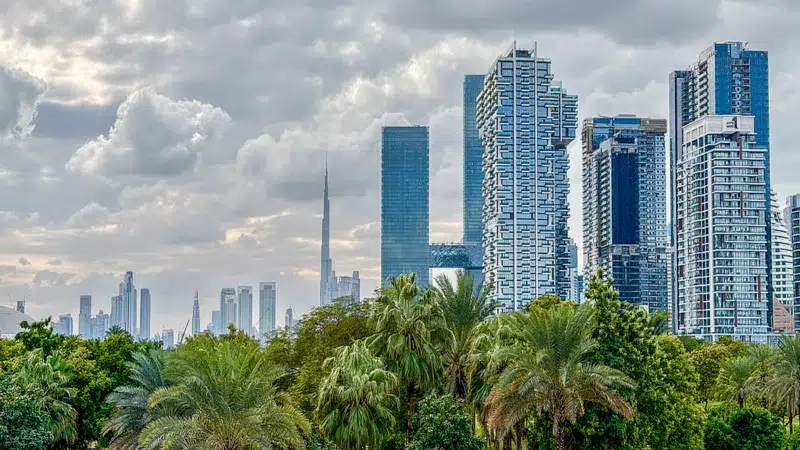
Dubai’s property market heads into 2026 shaped by two intertwined forces: a scarcity premium in prime districts and a structural rebalancing across segments, while the UAE capital, Abu Dhabi, gains ground as a compelling option for investors.
“One of the most notable trends heading into 2026 will be the continued rise of Abu Dhabi as a highly competitive Dubai real estate market, who also expects “increased market depth and expanded liquidity, particularly driven by efforts such as tokenisation and alternative ownership structures.”
Alajaji argues that the next cycle will correct an imbalance that has built up since 2020: a glut of residential launches alongside an under‑supplied office market. “Office demand has consistently exceeded the available supply… We expect major master developers and government‑backed entities to step in with purpose‑built office districts,” he says, suggesting strategic plans to address the shortage of high‑quality office stock.
Pricing will hinge on real‑time absorption, not broad narratives
For buyers trying to time entry, urges discipline anchored in data rather than sentiment. “The first indicator I look at is days on market — … from the listing going live to the day the property is actually sold,” he says. “This metric… tells you, in real time, whether demand is absorbing supply efficiently.” He adds a second yardstick: “absorption rate, particularly in the off‑plan segment… the number of units launched versus the number of units sold.”
Crucially, Al Msaddi warns against treating Dubai as a single monolith. “There is no such thing as ‘the Dubai market.’ You have to analyse it by location, price bracket, usage type, and buyer profile,” he says, arguing that granular analysis reveals opportunity while generic statements hide risk.
Supply peaks, rents soften; prices resilient where land is scarce
Driven’s outlook flags high handover volumes through 2026–27, leading to “some softening in rental prices, particularly in areas with higher levels of new supply.” Yet the firm expects “sales prices… to remain largely stable and, in certain segments, continue to trend upward,” with yields narrowing as strong asset values meet easing rents. “Locations with limited future supply will remain highly resilient,” Alajaji says.
That scarcity premium will be most evident in what Driven calls Dubai’s emerging “golden square”: Jumeirah Bay; the Jumeirah Water Canal corridor extending into Downtown and Business Bay; and DIFC, City Walk, and La Mer. These are “premium waterfront and central districts… with very limited scope for future development.”
Where the new land will come from — and how it will be built
With raw land tightening inside Dubai’s mature core, Alajaji expects more state‑private collaboration. “
Districts to watch: Jebel Ali’s scale, JVC’s volume, and fatigue pockets
If pipeline data is your map, Al Msaddi points to two zones. “Jebel Ali shows the highest volume of upcoming supply. However, Jebel Ali is a massive district… there is no oversupply risk whatsoever.” The second‑largest planned handovers are in Jumeirah Village Circle, where “more than 25,000 units are expected to be handed over \[over] the next three years.” That doesn’t equal trouble, he stresses, but buyers there must be “far more selective, focusing on building quality, layout, pricing, and differentiation.”
As for early fatigue, he says it appears “where speculation dominated” — entry‑level apartments, mid‑market stock with large upcoming handovers, and areas with repetitive, easily replaceable products. “Fatigue doesn’t mean collapse. It means buyers stop chasing and start negotiating.”
Regulatory tone: more transparency, operational discipline
Neither executive expects disruptive rule changes for foreign buyers, but Al Msaddi anticipates “more transparency and more strict regulation around developers and brokers’ operations.” He adds that “the entire market is waiting for the NOC for rental advertising permits that hopefully will come in Jan 2026,” reflecting Dubai Land Department’s direction toward tighter advertising controls.
overnment‑backed entities holding some of the largest land banks in the UAE will play a central role… Projects such as Dubai Design District, Palm Jebel Ali, and future phases of Dubai Islands are expected to launch from 2026 onwards,” he says. In periods of stabilisation or mild price softening, government developers are likely to “invite private developers to co‑develop within these master plans,” spreading risk and diversifying product while keeping long‑term balance.
Al Msaddi’s lens on the pipeline adds nuance. He sees no imminent oversupply risk in ready, completed stock, but urges vigilance in off‑plan, where “liquid, sellable inventory sitting within off‑plan developments” can behave like supply before handover if sentiment shifts.
Macro resilience: lower leverage, global capital and lifestyle pull
Even under a global slowdown, Al Msaddi argues Dubai would be “the ‘best of the worst’ if things turn negative worldwide,” citing lower mortgage dependence and the city’s draw for globally mobile wealth. “Wealth doesn’t disappear, it compresses… they still need safe, functional, and attractive places to live and invest,” he says, positioning Dubai for faster recovery than many Western markets.
Investor playbook for 2026: selection over speculation
What should investors do with this mosaic? Alajaji’s supply map suggests leaning into scarcity and institutional quality — prime waterfronts and central districts with limited new land, alongside purpose‑built office stock where demand outstrips supply.
Al Msaddi’s guidance is sharper on execution: “Avoid projects with a mass number of identical units… Scale kills scarcity, and scarcity is what protects value,” he says. Above all, “the most important factor is pricing discipline” — compare against true comps for sales and rents inside the same building or community. He also urges first‑time buyers to prioritise the “living experience,” since projects people love to live in “hold value better in slower markets, attract consistent rental demand, \[and] remain desirable long after launch hype fades.”
Finally, set your risk rails: watch days‑on‑market and off‑plan absorption across projects; be extra selective in high‑volume pipelines like JVC; and plan exits at purchase, not later. If a global liquidity shock coincides with supply landing faster than absorption and speculative owners exiting, “certain segments reprice, not the entire market,” Al Msaddi cautions. In his view, “2026 will not be defined by boom or bust, it will be defined by selection… Discipline, not optimism, will decide outcomes.”
Bottom line: Expect selective strength where land is scarce and office stock is curated; more institutional master plans unlocking new districts; and a market that rewards data‑driven discipline over broad narratives. Or, as Driven’s Alajaji sums up, resilience will concentrate in places “with minimal remaining land supply,” while yields compress amid high handovers — a backdrop in which only the right assets, and the right prices, work.
For More Details: Please Visit FajarRealty
Source: Khaleej Times
02nd January, 2026
