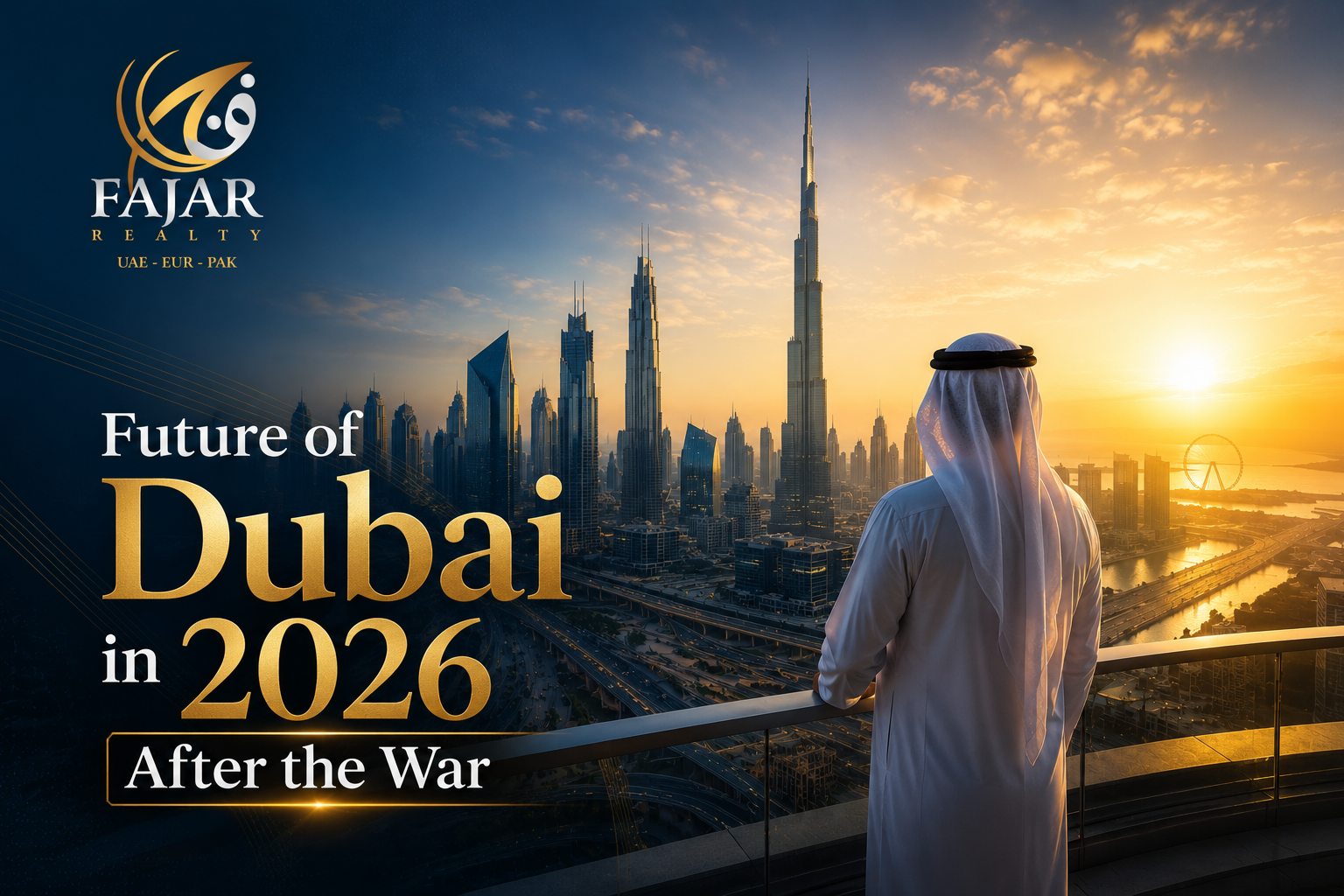
While many global cities struggle during periods of geopolitical uncertainty, Dubai has repeatedly demonstrated its ability to transform challenges into opportunities. The ongoing tensions and conflicts across parts of the Middle East have naturally raised questions among investors, businesses, residents, and tourists about Dubai’s future. Will economic growth slow down? Will property prices fall? Or will Dubai once again emerge stronger than before?
The reality is that Dubai enters 2026 from a position of strength. The emirate has spent decades building a diversified economy based on tourism, real estate, technology, finance, logistics, and international trade. While regional conflicts may create temporary disruptions in supply chains, travel patterns, and investor sentiment, Dubai’s long-term vision remains intact. Government initiatives, mega infrastructure projects, and foreign investment continue to support growth, making Dubai one of the most resilient cities in the world.
Understanding the Impact of the War on Dubai
Dubai’s economy is closely connected to global trade routes and international markets. Any conflict affecting the Middle East can create uncertainty in energy markets, shipping routes, and investor confidence. Recent tensions have increased transportation costs and caused temporary disruptions to regional trade. Businesses have become more cautious while monitoring geopolitical developments.
However, Dubai’s economic structure differs significantly from many oil-dependent economies. Non-oil sectors continue to drive growth, including tourism, financial services, technology, healthcare, logistics, and real estate. This diversification helps shield Dubai from prolonged economic shocks and allows the emirate to adapt more effectively than many competing markets. Even amid regional challenges, business activity remains positive, and investor confidence continues to hold relatively strong.
Dubai’s Economic Resilience in 2026
Dubai’s economic resilience stems from years of strategic planning and diversification. The emirate has reduced its dependence on oil revenues and positioned itself as a global business hub. International corporations continue to establish regional headquarters in Dubai due to its favorable tax policies, world-class infrastructure, and business-friendly regulations. These factors remain attractive regardless of short-term geopolitical tensions.
Economic forecasts for 2026 remain positive, with the UAE expected to maintain growth levels that outperform many major global economies. Government investments in innovation, renewable energy, technology, and logistics continue to create new opportunities for businesses and investors. As a result, Dubai remains one of the most attractive destinations for global capital despite regional uncertainties.
The Future of Dubai Real Estate Market
The real estate sector often becomes the first area investors watch during periods of geopolitical uncertainty. Some buyers may temporarily delay purchasing decisions while waiting for greater stability. This can create short-term fluctuations in demand, especially within luxury property segments.
Despite these temporary adjustments, Dubai’s property market continues to benefit from strong population growth, foreign investment, Golden Visa programs, and ongoing infrastructure expansion. Long-term demand for residential, commercial, and mixed-use developments remains strong. Investors seeking stable returns still view Dubai as one of the safest property markets in the region.
Emerging Investment Hotspots
Several districts are expected to lead Dubai’s next growth cycle. Areas connected to Expo City, Dubai South, Business Bay, Dubai Marina, and Dubai Silicon Oasis continue to attract developers and investors due to planned infrastructure improvements and business expansion initiatives. These locations align closely with Dubai’s long-term urban development strategy.
As infrastructure projects progress, these emerging zones may experience increased property demand, higher rental yields, and stronger capital appreciation. Investors focusing on long-term fundamentals rather than short-term market sentiment are likely to benefit from these developments over the coming years.
Tourism Industry Outlook After the War
Tourism remains one of Dubai’s strongest economic pillars. During periods of regional uncertainty, tourist arrivals may temporarily slow as travelers assess security conditions. However, Dubai’s reputation as a safe, modern, and highly organized destination helps it recover faster than many competing markets.
Major attractions, luxury hotels, shopping destinations, entertainment venues, and global events continue to attract millions of visitors annually. The government’s commitment to expanding tourism infrastructure further strengthens Dubai’s position as a leading global destination. As confidence returns, tourism growth is expected to accelerate once again throughout 2026 and beyond.
Luxury Hospitality and Mega Projects
Dubai continues to launch world-class hospitality developments, branded residences, and tourism-focused projects. These investments demonstrate long-term confidence in the city’s future and support sustained growth in visitor numbers. International hotel brands, entertainment operators, and tourism investors remain committed to expanding their presence in the emirate.
The continued development of luxury resorts, waterfront communities, cultural attractions, and entertainment destinations ensures that Dubai remains competitive on a global scale. These projects not only attract tourists but also create employment opportunities and stimulate broader economic activity.
Dubai 2040 Vision Driving Growth Beyond 2026
One of the strongest indicators of Dubai’s future potential is the Dubai 2040 Urban Master Plan. This long-term strategy focuses on sustainable growth, improved quality of life, expanded green spaces, enhanced mobility, and increased economic activity. The plan serves as a roadmap guiding development regardless of temporary regional challenges.
Key objectives include expanding commercial zones, increasing tourism infrastructure, improving transportation networks, and developing vibrant communities. These initiatives are designed to support a larger population, attract foreign investment, and strengthen Dubai’s position as a global city over the next two decades.
Infrastructure and Smart City Development
Technology will play a central role in Dubai’s future growth strategy. Smart city initiatives, artificial intelligence integration, digital government services, and advanced transportation systems continue to receive significant investment. These innovations improve efficiency, attract global talent, and enhance the overall business environment.
At the same time, major transportation projects, green mobility solutions, and urban regeneration programs are reshaping the city. Such developments support economic diversification while improving sustainability and livability for residents and businesses alike.
Opportunities for Investors in 2026
Periods of uncertainty often create opportunities for strategic investors. While some market participants focus on short-term risks, experienced investors frequently identify long-term value during such periods. Dubai’s strong fundamentals, investor-friendly policies, and global connectivity continue to attract capital from around the world.
Real estate, technology, logistics, tourism, financial services, and renewable energy sectors all present promising opportunities. Investors who align their strategies with Dubai’s long-term vision may benefit from future growth as regional stability improves and economic momentum strengthens.
Conclusion
Dubai’s future in 2026 after the war remains highly promising despite short-term geopolitical challenges. While regional conflicts can create temporary economic and market uncertainty, Dubai’s diversified economy, strong leadership, world-class infrastructure, and ambitious long-term vision provide a solid foundation for continued growth. The emirate has repeatedly demonstrated its ability to adapt, innovate, and attract global investment during challenging times.
For investors, businesses, and residents, the key takeaway is clear: Dubai’s long-term growth story remains intact. Supported by the Dubai 2040 Urban Master Plan, expanding economic sectors, major infrastructure projects, and continued foreign investment, the city is well-positioned to remain one of the world’s most dynamic destinations. Those who focus on long-term opportunities rather than short-term uncertainty may find 2026 to be a pivotal year in Dubai’s next phase of development.